or Call 07784 819 153
Security bollards are vertical posts used to restrict vehicle access, protect parking spaces and create a physical boundary between vehicles and other parts of a property. They can be installed across residential driveways, commercial entrances, private car parks and other controlled access points.
Some bollards remain permanently upright, while others can be folded, removed or lowered into the ground when access is needed. This allows property owners to choose a system that suits how frequently vehicles enter and leave the site.
Although bollards can provide a useful physical obstacle and visible deterrent, they should be used as one part of a wider security plan. The performance of any installation depends on the product, its position, the foundation and the way it is used.
How Do Security Bollards Work?
A security bollard works by placing a physical barrier across the route a vehicle would need to use. When the post is raised or locked in position, it restricts access to the driveway, parking space or protected area behind it.
The way the bollard is opened depends on its design. Some posts fold against the ground, some lift completely out of a socket and others retract into a housing below the surface. Fixed bollards do not move and are used where permanent vehicle restriction is required.
Many manually operated bollards use a lock and key. Once the post has been placed in its secure position, the lock helps prevent an unauthorised person from lowering or removing it.
What Are Security Bollards Used For?
Bollards can serve several purposes around homes and commercial premises. Their suitability will depend on the layout and the type of vehicle access being managed.
Common uses include:
- Creating an additional barrier in front of vehicles parked on a driveway
- Preventing unauthorised vehicles from using a private parking space
- Restricting entry to private roads, forecourts and service areas
- Protecting garage doors, walls and equipment from low-speed vehicle movements
- Separating vehicle routes from pedestrian areas
- Controlling access outside normal operating hours
A standard security bollard should not automatically be assumed to stop every vehicle collision or deliberate attack. Specialist locations requiring tested vehicle-impact protection need purpose-designed, appropriately rated barriers and a professional security assessment.
Different Types Of Security Bollards
The main difference between bollard types is how they allow authorised vehicles to pass. The right option will depend on how often access is required, how much space is available and who will operate the post.
Fixed Bollards
Fixed bollards are permanently installed and remain upright at all times. They are generally used where vehicles should not pass through the protected area.
They may be positioned beside building entrances, around vulnerable equipment or along the edge of a vehicle route. Because they cannot be moved, their location must be planned carefully so that they do not obstruct deliveries, emergency access or pedestrian routes.
Fixed posts are less suitable across the entrance to a driveway that is used regularly, unless enough open space remains for authorised vehicles.
Fold-Down Bollards
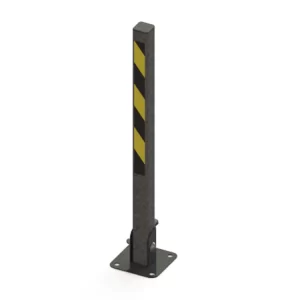
Fold-down bollards have a hinged base that allows the post to move between an upright and lowered position.
When access needs to be restricted, the bollard is raised and locked. When a vehicle needs to pass, it is unlocked and folded towards the ground.
This design can work well for private driveways, allocated parking bays and entrances that are opened regularly. The lowered post remains on the surface, so enough room is needed for it to lie safely without obstructing tyres, pedestrians or vehicle doors.
Removable And Lift-Out Bollards
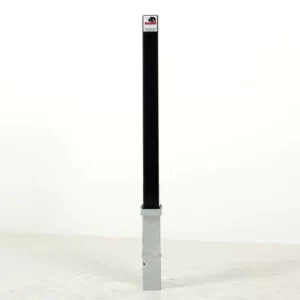
Removable bollards lock into a socket installed below ground level. When the entrance needs to be opened, the post is unlocked and lifted completely out of the socket.
Removing the whole post leaves the access route clear. This can make the design suitable for shared driveways, occasional delivery entrances and locations where a folded post would be inconvenient.
The user must be comfortable lifting and carrying the bollard. A secure storage place is also needed so that the post is not damaged, misplaced or left where it could cause an obstruction.
Telescopic Bollards
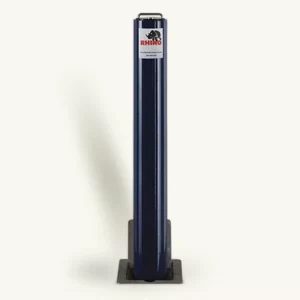
Telescopic bollards slide vertically into a steel housing installed beneath the driveway or access surface.
The post is pulled upwards and locked when protection is required. It can then be unlocked and lowered into the underground housing when a vehicle needs to pass.
This leaves the route relatively clear without requiring the post to be carried away or folded across the surface. Some heavier telescopic models include lift assistance to reduce the effort needed to raise them.
Because the housing is below ground, suitable excavation and drainage are important. Water, mud and debris should not be allowed to collect around the mechanism.
What Are Security Bollards Made From?
Many driveway and commercial security bollards are manufactured from steel. Products may use galvanised steel, powder-coated steel or stainless steel depending on the required finish and environment.
Galvanising applies a protective zinc coating to carbon steel, helping to reduce corrosion. Powder coating adds a coloured protective finish, while stainless steel is often chosen where appearance and corrosion resistance are priorities.
Bollards can also be made from concrete, cast materials and flexible polymers. These products may be more suitable for permanent landscaping, traffic guidance or visual separation than residential driveway access.
The material alone does not determine how a bollard will perform. The dimensions of the post, wall thickness, locking mechanism, ground socket, foundation and installation method are also important.
Do Security Bollards Prevent Vehicle Theft?
A locked bollard can make it more difficult to drive a vehicle directly off a driveway, particularly when it is positioned between the parked vehicle and the road. Its visibility may also encourage an opportunistic offender to look for an easier target.
However, no security product can guarantee that a vehicle will not be stolen. A bollard should be combined with sensible measures such as:
- Locking the vehicle and closing all windows
- Using a visible steering-wheel lock
- Keeping vehicle keys away from doors, windows and letterboxes
- Using suitable signal-blocking storage for keyless vehicle keys
- Activating any fitted alarm or tracking system
- Providing suitable lighting around the driveway
- Keeping bollard keys separate from vehicle keys where practical
The bollard also needs to be raised and locked whenever protection is required. A post that is regularly left lowered will provide little benefit.
How Many Bollards Are Needed?
The number of bollards required depends on the width and shape of the entrance. One post may be sufficient for a narrow driveway, while a wider entrance might need two or more to prevent a vehicle from passing around them.
When planning the position, consider:
- The width of the vehicles using the driveway
- The angle needed to enter and leave safely
- The space between the bollard and parked vehicles
- Pedestrian access across the entrance
- Nearby gates, garage doors and drainage channels
- Shared access arrangements and property boundaries
- The location of underground pipes and cables
A bollard placed too close to a vehicle may make parking awkward. If it is positioned too far to one side, there may be enough space for another vehicle to pass around it.
Why Professional Installation Matters
The ground installation helps determine how secure, stable and easy to operate the bollard will be. Different products require different foundations, fixings and excavation depths.
A surface-mounted fold-down bollard may need a prepared concrete base, while removable and telescopic products require below-ground sockets or housings. Block paving, tarmac, concrete and gravel driveways may each require a different installation approach.
The proposed area should also be checked for water pipes, drainage runs, electricity cables and other underground services before excavation begins.
For below-ground systems, drainage is particularly important. Poor drainage may allow water and debris to collect around the housing, which can interfere with operation and shorten the working life of moving components.
Choosing The Right Security Bollard
Begin by considering how the entrance is used. A fixed bollard may suit an area that should remain permanently closed, while a fold-down, removable or telescopic post is more practical where regular vehicle access is required.
It is also worth considering who will operate the bollard. A removable post must be lifted and stored, while a telescopic design may be easier to manage because it remains within its underground housing.
The driveway surface, available excavation depth, number of vehicles and required position will all influence the final choice.
For help selecting and positioning a security bollard, contact Northern Bollards with a photograph and details of the proposed installation area.
Contact Northern Bollards
Driveway and Security Bollards Professionally Installed and Serviced by Northern Bollards in Yorkshire – A Cost-Effective Solutions To Vehicle and Property Security.
Popular Bollards


Read Another Post…