Get In Touch
Tell us what you need and we’ll come back to you with advice, suitable bollard options and the next steps for getting your installation booked.
Security bollards may look relatively simple from the outside, but there is considerably more to their construction than a length of steel fixed into the ground. The material, wall thickness, locking system, protective finish, below-ground components and installation all influence how the finished bollard performs.
Different bollards are also designed for very different jobs. A lightweight flexible post used to guide traffic is not intended to provide the same level of physical security as a substantial steel bollard installed into a prepared foundation.
Understanding how bollards are manufactured makes it easier to compare products and decide what is suitable for a driveway, parking area or commercial property.
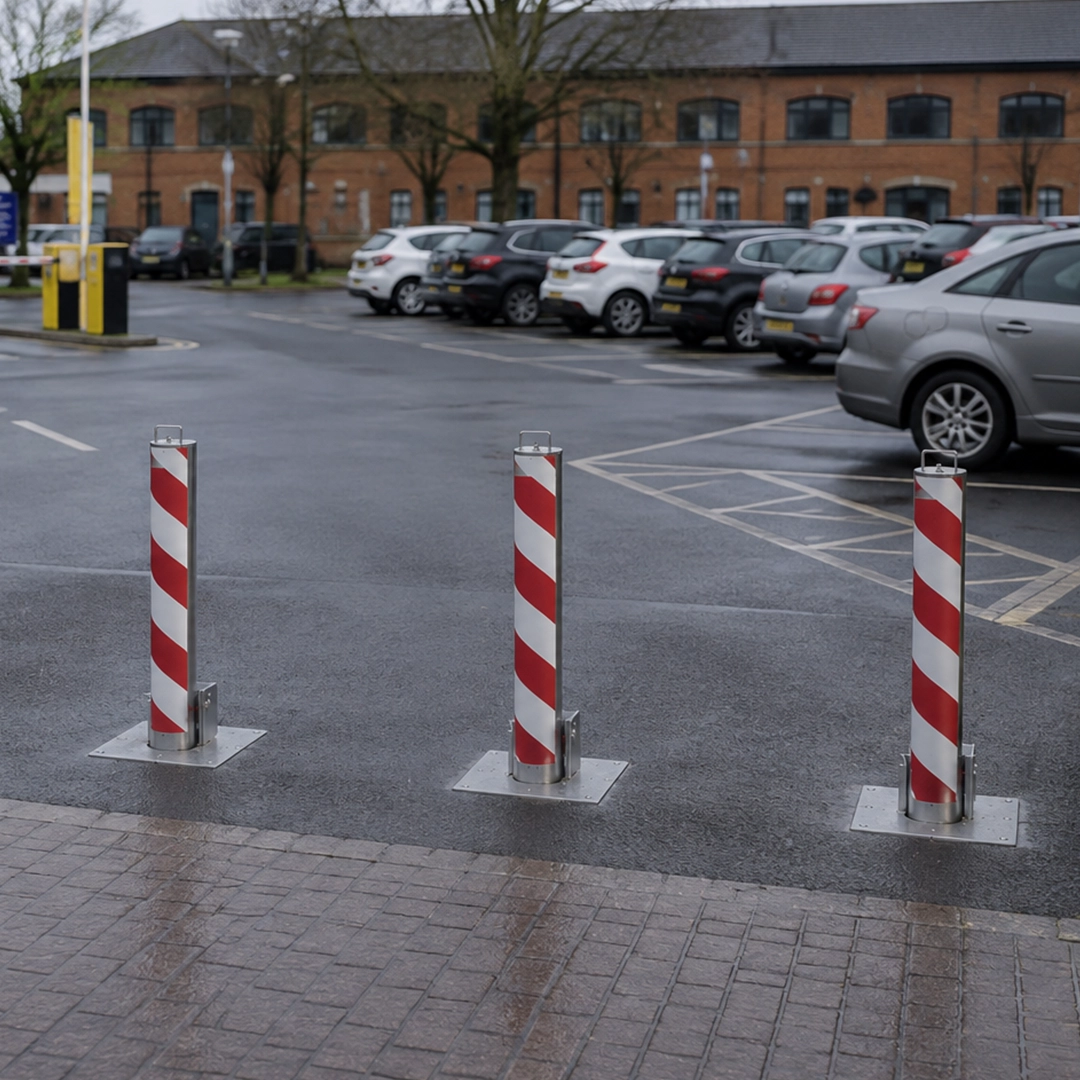
Security bollards can be manufactured from several materials, including mild steel, stainless steel, concrete and various plastics or polymers.
The right material depends largely on what the bollard is expected to do.
Common materials include:
For driveway and commercial security applications, steel is one of the most common choices because it can be manufactured in different diameters and thicknesses, combined with secure locking mechanisms and installed into substantial ground housings.
A steel security bollard is generally manufactured through several stages, beginning with the product specification and ending with the protective finish and final assembly.
The exact process varies by manufacturer and bollard design, but typically involves:
Moving bollards require additional components because the post needs to operate repeatedly without excessive movement, sticking or misalignment.
Before any steel is cut, the manufacturer needs to establish exactly what is being produced.
The specification can include:
A fixed bollard has relatively few moving components. A telescopic bollard is more involved because the design also needs to accommodate the housing beneath the driveway, the movement of the post and the locking mechanism.
The main post normally begins as steel tube manufactured to the diameter, profile and wall thickness required by the design.
Steel plate may also be needed for components such as base plates, lids, housings and internal supports.
These materials are cut to the dimensions specified for the particular bollard.
Precision matters. If components are cut or aligned poorly, it can affect how the completed bollard sits in its housing, how the lock engages and how smoothly a moving bollard operates.
Depending on the design, the steel may then be drilled, machined or formed to accommodate other parts of the bollard.
These can include:
Telescopic and removable bollards generally require more components than a simple fixed post because the bollard needs to move while remaining stable once secured.
Individual steel components are then joined together, often using welding.
Depending on the bollard, this may involve joining:
The position and quality of these joints matter because the bollard needs to function as a complete assembly rather than simply as a hollow steel tube.
Moving products also need enough precision to allow repeated operation without the post becoming excessively loose or difficult to move.
The material is important, but steel alone does not determine how strong a security bollard will be.
Several aspects of the construction work together, including:
A larger diameter or thicker-walled post will generally feel more substantial, but the finished installation still depends on how that post is secured into the ground.
A strong-looking bollard sitting in an unsuitable foundation may not perform as intended.
Yes. The wall thickness, sometimes referred to as the gauge of the post, is one of the factors affecting the construction of a steel bollard.
Two bollards may appear similar in photographs while using steel of different thicknesses internally.
Heavier-duty products may also incorporate additional reinforcement within the post rather than relying solely on the outer steel tube.
Thickness should still be considered alongside diameter, locking arrangement and the way the bollard is installed rather than treated as a single measure of security.
The diameter of a round bollard affects both its appearance and construction.
Domestic products may use a relatively slim post that provides a useful physical barrier without dominating the driveway, while heavier-duty security bollards can use larger diameter sections and thicker steel.
The correct choice depends on the intended application rather than simply selecting the largest available product.
Mild steel is commonly used for security bollards because it can be cut, formed and welded into strong structural components.
It can also be manufactured in a wide range of diameters and thicknesses, making it suitable for anything from domestic driveway bollards to heavier commercial security posts.
Because ordinary carbon steel can corrode when repeatedly exposed to moisture, outdoor products usually require a protective finish.
Outdoor bollards spend their entire working life exposed to rain, moisture, road dirt and changing temperatures, so corrosion protection is an important part of their manufacture.
Common methods include galvanising and powder coating.
Hot-dip galvanising protects prepared steel by coating it in zinc.
The process creates a protective layer over the underlying steel, helping it withstand outdoor exposure.
Galvanised steel typically has a silver or grey appearance. Slight differences in the appearance of the surface can occur naturally as part of the galvanising process.
Powder coating allows a steel bollard to be given a coloured finish while adding another protective layer to the surface.
A dry powder is applied to prepared metal and then cured to produce a continuous coating.
This makes it possible to offer security bollards in colours such as:
Colour can be chosen for appearance, visibility or both. Black bollards can sit discreetly on a residential driveway, while brighter finishes may be preferable around busy commercial areas where drivers need to notice the posts easily.
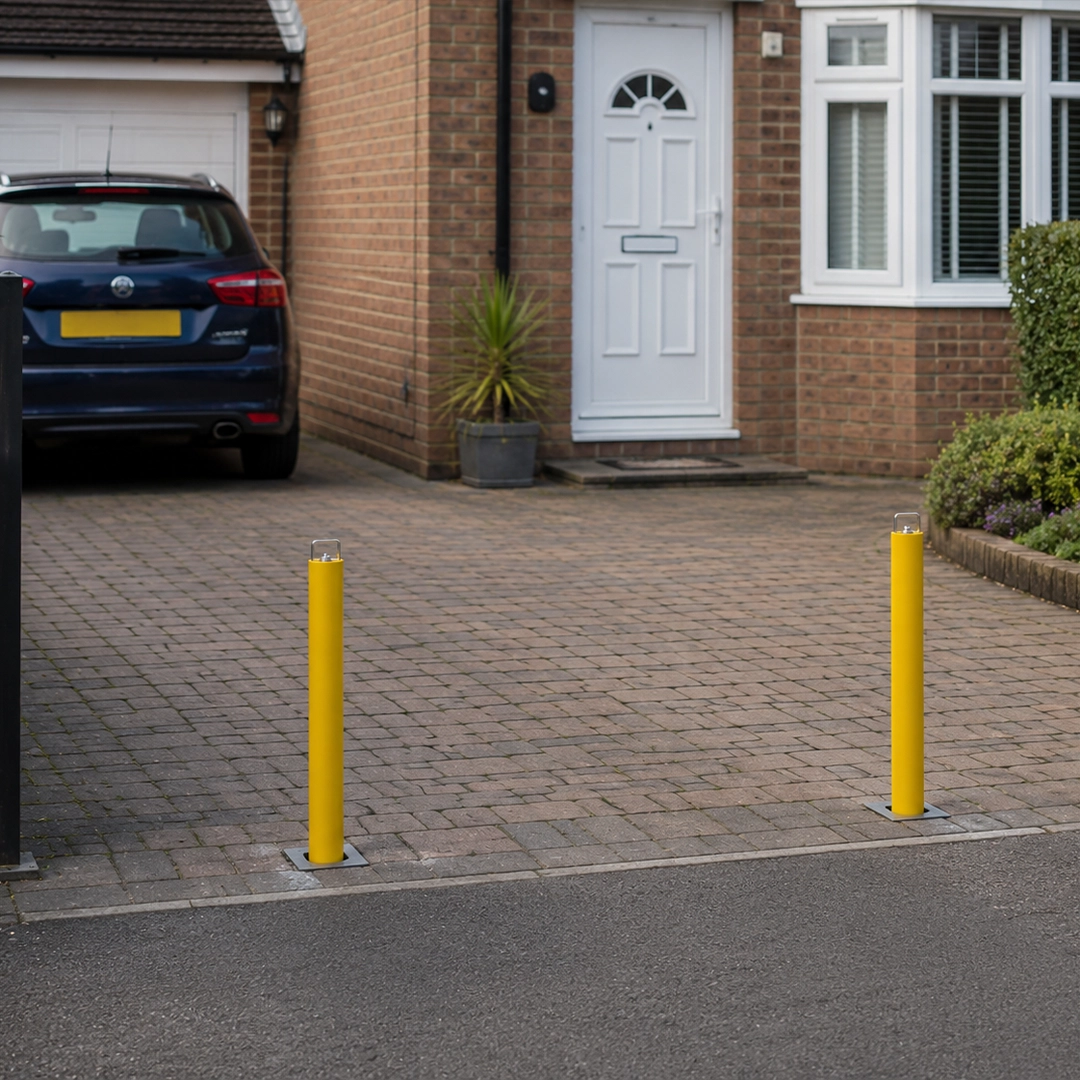
Stainless steel bollards go through many of the same cutting, forming, welding and assembly stages as other steel products.
The difference is the material itself.
Stainless steel contains alloying elements that improve corrosion resistance, which can make it attractive where the bollard will remain visible outside a home, office or commercial development.
The finished surface may be:
Stainless steel is resistant to corrosion rather than completely maintenance free. Occasional cleaning can help maintain its appearance, particularly where the post is exposed to road deposits, dirt and pollution.
Neither material is automatically the right choice for every installation.
Mild steel security bollards can provide substantial construction and can be galvanised or powder coated to protect the surface.
Stainless steel is often chosen where a more premium visible finish is important alongside security.
The decision may therefore depend on:
You can compare the different materials and configurations within the Northern Bollards range of security bollards.
A telescopic bollard is more complex than a fixed post because much of the product sits below the driveway when access is open.
The visible steel post forms only part of the complete system.
A typical telescopic bollard can include:
When access is required, the post moves down into the outer housing. It can then be raised and secured again when the driveway needs protecting.
The relationship between the post and housing needs to be carefully controlled so the bollard remains aligned during operation.
Some heavier products can also include mechanisms designed to make lifting the post easier.
Northern Bollards offers a range of telescopic security bollards for domestic and heavier-duty installations.
A removable bollard consists of a separate security post and a socket installed into the ground.
The post needs to fit securely into the socket when locked while remaining straightforward to release when access is required.
Some designs include a cover for the ground opening when the post has been removed.
Unlike a telescopic bollard, the post does not remain within the driveway. It needs to be lifted completely out and stored elsewhere.
Fold-down bollards incorporate a hinge assembly close to ground level.
The post locks vertically when access needs to be restricted and pivots down towards the driveway when the entrance is opened.
The hinge needs to withstand repeated operation while maintaining sufficient stability when the bollard is upright.
Its base also needs to be installed onto an appropriate surface or foundation.
Fixed steel bollards are generally simpler mechanically because they do not need locks, hinges or retracting mechanisms.
The main consideration is creating a strong post and securing it appropriately into the ground.
They can be used where permanent vehicle restriction is required, such as:
Yes. Concrete bollards are generally produced using moulds rather than fabricated from tube and plate.
Concrete is prepared and poured into the required form, sometimes around internal reinforcement depending on the product design.
The material then needs time to cure before the bollard is finished and installed.
Because concrete bollards are heavy and generally permanent, they are commonly associated with public spaces, landscaping and permanent traffic separation rather than frequently opened residential driveways.
Plastic or flexible bollards are normally manufactured using moulding processes.
They may use bright colours and reflective bands to improve visibility and can be useful for:
They should not be confused with substantial steel security bollards.
A flexible post designed to bend when struck performs a fundamentally different job from a steel post intended to physically restrict vehicle access.
The locking mechanism is an important part of any movable security bollard.
A substantial steel post is of limited value if it cannot remain securely locked in its raised position.
The lock also needs to remain practical to operate in an outdoor environment where the bollard may be exposed to rain, dirt and frequent use.
Depending on the product, multiple bollards may also be available keyed alike so that the same key can operate several posts.
This can be particularly convenient where two or more bollards are installed across the same driveway or commercial entrance.
Yes. Manufacturing the bollard is only part of the overall security system.
The finished product also depends on what happens once it reaches the property.
Installation can involve:
A correctly manufactured product installed badly may not perform or operate as intended.

A security bollard transfers loads into the ground around it.
The foundation or below-ground housing therefore plays an important role in keeping the post stable.
The required installation will vary according to the bollard, ground conditions and driveway construction.
Concrete, tarmac and block paving can each require a different approach to excavation and reinstatement.
Drainage is particularly relevant for telescopic products because the bollard retracts below ground.
Water, dirt and debris collecting around the housing can interfere with moving components if the installation is not designed and maintained appropriately.
This is why the area below the attractive visible post matters just as much as the section seen above the driveway.
A below-ground bollard cannot simply be installed anywhere there appears to be enough space on the surface.
The area beneath a driveway can contain:
These can influence where excavation is possible and may require the proposed position to be changed.
No. Terms such as “heavy duty”, “security bollard” and “steel bollard” do not automatically mean that a product has undergone recognised vehicle-impact testing.
Crash-rated security barriers are assessed under defined testing conditions using specific vehicle weights, speeds and impact arrangements.
A standard security bollard can still create a substantial physical obstacle for access control and vehicle protection, but it should not be assumed to provide a particular level of impact resistance without supporting evidence for that specific product.
The difference is primarily the job each product is designed to perform.
A traffic bollard may be intended to:
A security bollard is intended to create a more substantial physical restriction to vehicle movement.
Two products may therefore both be called bollards while having very different construction and performance.
Rather than comparing products on appearance alone, look at the complete specification.
Useful details can include:
The right specification will depend on whether the bollard is protecting a domestic driveway, controlling parking or providing a heavier-duty barrier around commercial premises.
Many security bollards are manufactured from mild steel or stainless steel. The material, thickness, diameter and overall design vary according to the intended application.
Galvanising applies a protective zinc coating to steel, helping protect the underlying material from corrosion when used outdoors.
A powder-coated bollard has a coloured protective finish applied to prepared metal and cured to form a continuous coating. It allows steel bollards to be supplied in colours such as black, grey, white or yellow.
They offer different benefits. Stainless steel provides good corrosion resistance and a premium visible finish, while mild steel can be used to manufacture substantial security posts and protected using galvanising or powder coating.
Heavy-duty construction can involve a larger post diameter, thicker steel, internal reinforcement, a substantial ground housing and a robust locking arrangement. The installation and foundation are also important.
Many security bollards are manufactured from thick-walled steel tube rather than being completely solid. The exact construction depends on the individual product and may also incorporate internal reinforcement.
The visible post retracts into an outer housing installed beneath the driveway. Internal components keep it aligned as it moves between its raised and lowered positions.
No. A steel bollard should only be described as impact or crash rated where the particular product has supporting evidence from recognised vehicle-impact testing.
Steel thickness is one important factor, but it should be considered alongside the post diameter, reinforcement, lock, ground housing, foundation and installation.
What appears above the driveway is only part of a security bollard. The material, steel thickness, internal construction, locking system, protective finish, ground housing and installation all contribute to the finished result.
This is why two bollards that look broadly similar can have very different specifications.
The best product will depend on where it is being installed, how often it will be operated and what level of vehicle control is required.
If you need help comparing products or choosing a suitable security bollard for your driveway, parking area or commercial property, contact Northern Bollards to discuss the proposed installation.
Tell us what you need and we’ll come back to you with advice, suitable bollard options and the next steps for getting your installation booked.
Read Another Post…