Get In Touch
Tell us what you need and we’ll come back to you with advice, suitable bollard options and the next steps for getting your installation booked.
Security bollards are strong vertical posts used to control vehicle access, protect parking spaces and create a physical barrier between vehicles and areas that need to remain protected.
They can be installed on residential driveways, commercial premises, private car parks and controlled entrances. Depending on the design, a security bollard may remain permanently upright or move out of the way when authorised vehicles need access.
The main types include fixed, removable, fold-down and telescopic bollards. The best option depends on where the bollard is being installed, how frequently access is required and the level of physical security needed.
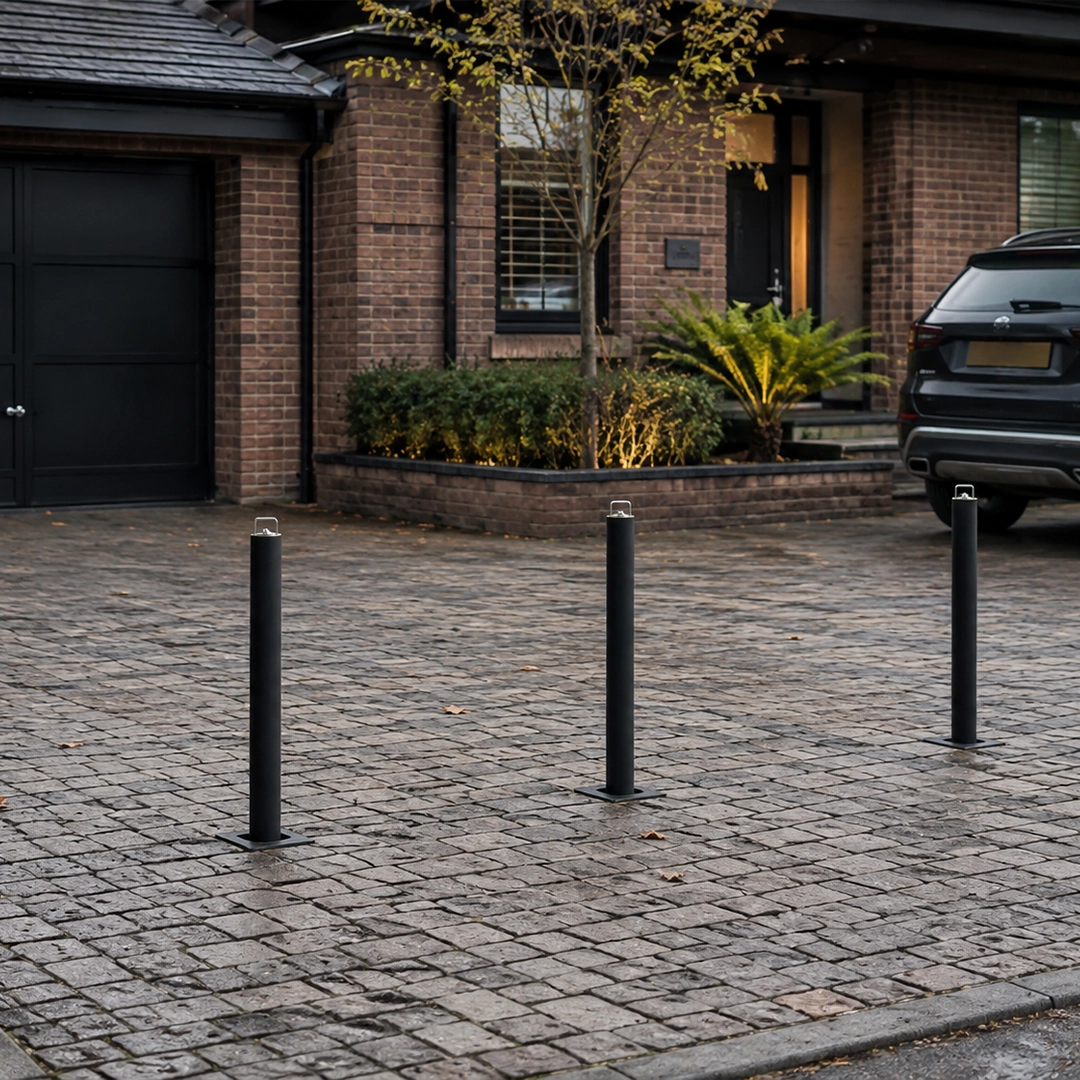
A security bollard is a post positioned to prevent or restrict vehicle movement through a particular area.
Unlike CCTV, alarms or warning signs, a bollard creates a physical obstacle. When correctly positioned and secured, a vehicle cannot simply follow its normal route through the protected entrance without first getting past the bollard.
Security bollards are commonly used to:
The term covers a wide range of products. A domestic driveway bollard and a specialist impact-rated security barrier may both be described as bollards, but their construction, purpose and performance can be very different.
A security bollard works by blocking the route a vehicle needs to take.
For example, a bollard installed between a parked car and the road can create an additional obstacle that needs to be overcome before the vehicle can be driven away. At a commercial entrance, the same principle can be used to stop unauthorised vehicles entering a private area.
How access is opened depends on the type of bollard.
A fixed bollard remains permanently upright. A removable bollard can be lifted out. A fold-down bollard pivots towards the ground, while a telescopic bollard retracts vertically into a housing beneath the surface.
Most manually operated security bollards use a locking system to secure the post when it is in its raised position.
Security bollards are used wherever there is a need to physically manage vehicle access.
One of the most common domestic uses is positioning bollards between parked vehicles and the road.
A raised and locked bollard creates a physical barrier that can make it more difficult to remove a vehicle from the driveway without permission.
This is particularly useful on open-fronted properties where there is no gate or other permanent boundary between the driveway and the street.
You can view suitable options on the Northern Bollards driveway security bollards page.
A security bollard can prevent somebody from simply driving into a private driveway or allocated parking space.
This can be useful for homes and businesses in areas where private parking is frequently used without permission.
Unlike a sign asking drivers not to park, a raised bollard provides a physical restriction.
Businesses can use bollards to restrict entry to private car parks, service areas, yards and other controlled parts of a site.
Movable bollards can keep an entrance closed when access is not permitted while allowing staff, deliveries or authorised vehicles through when required.
Fixed bollards can help define the boundary between vehicle routes and pedestrian areas.
This may be useful around commercial premises, car parks, building entrances and service yards where people and vehicles move through the same site.
Bollards may also be positioned around garage entrances, building corners, external equipment and other areas where normal vehicle movements need to be restricted.
The required product should always reflect the intended purpose. A standard parking bollard should not automatically be assumed to provide tested protection against a deliberate or high-speed vehicle impact.
The main difference between security bollards is how they deal with authorised access.
Fixed bollards remain permanently upright and are used where vehicles should not pass through an area at all.
They are often suitable beside buildings, around equipment, along pedestrian areas or at permanently restricted vehicle routes.
Because they cannot be lowered or removed, their position needs to be carefully planned around pedestrian routes, deliveries and emergency access.
A fold-down bollard is hinged close to ground level.
The post is raised and locked when access needs to be restricted and lowered towards the surface when a vehicle needs to pass.
This type can work well for private driveways and parking bays, although the lowered post remains on the ground and therefore requires sufficient clearance.
Removable bollards fit into a socket installed beneath the surface.
When access is required, the bollard is unlocked and lifted out completely. This leaves the vehicle route clear but means the post needs to be carried and stored somewhere secure.
They can work particularly well where an entrance only needs to be opened occasionally.
Telescopic bollards retract into a housing installed beneath the driveway or access surface.
When security is required, the post is raised and locked. When a vehicle needs to pass, it is lowered vertically back into the ground.
This makes them particularly practical for entrances that are opened regularly because the bollard stays within its underground housing rather than having to be stored elsewhere.
Northern Bollards supplies a range of telescopic security bollards for domestic and heavier-duty applications.
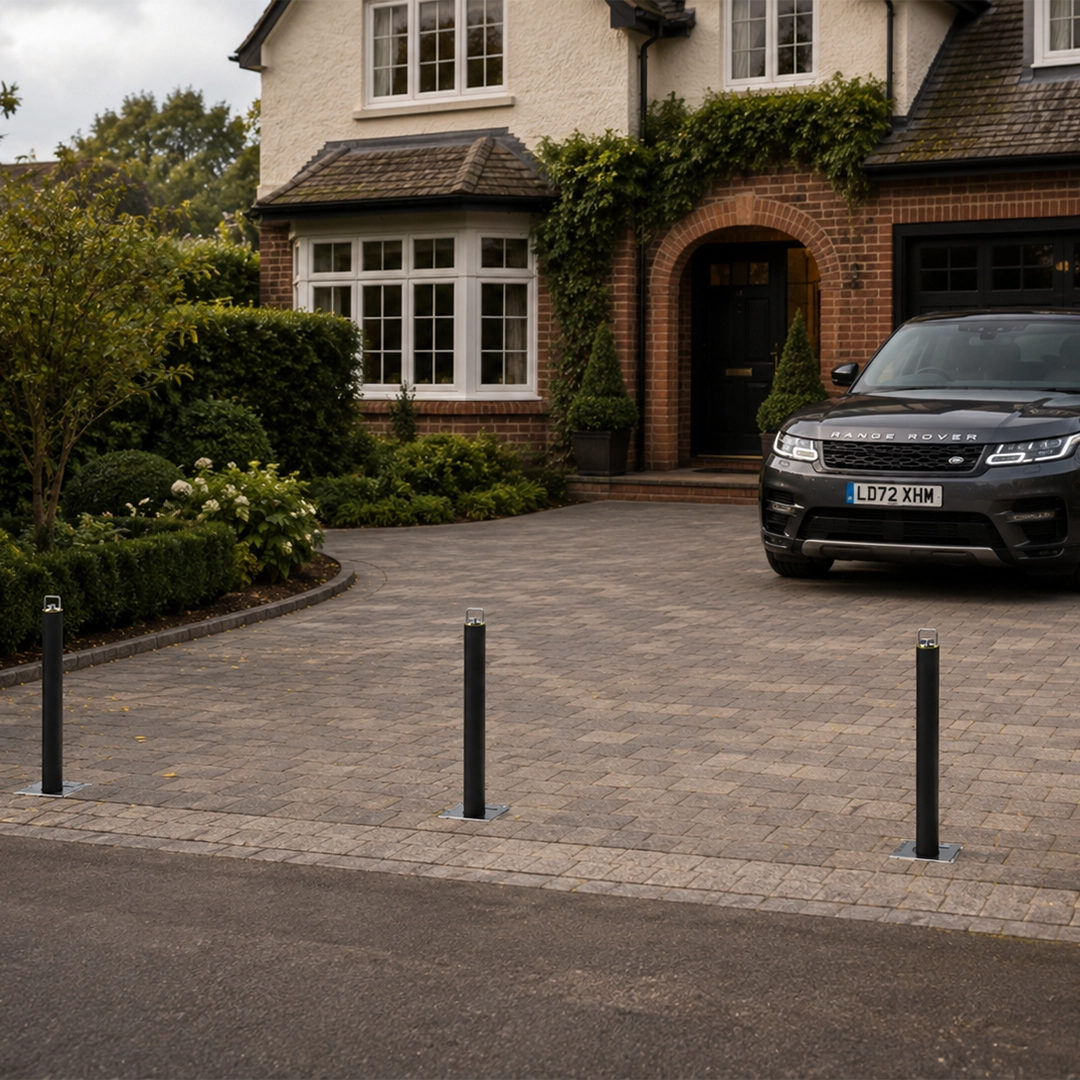
Many security bollards intended for driveways and commercial access are manufactured from mild steel or stainless steel.
Mild steel can be produced in different diameters and wall thicknesses and is commonly protected using galvanising, powder coating or a combination of finishes.
Stainless steel provides good corrosion resistance and is often selected where the appearance of the bollard is particularly important.
Other bollards may be made from concrete, cast materials or flexible polymers, but these can have very different purposes.
A lightweight flexible bollard intended to guide traffic should not be confused with a steel security bollard designed to restrict vehicle access.
The material is only one part of a bollard’s overall construction.
Important factors can include:
A substantial steel post installed into unsuitable ground may not perform as intended. The bollard and its foundation need to work together as a complete system.
A correctly positioned bollard can make it more difficult to drive a vehicle directly off a driveway.
If the bollard is raised between the vehicle and the road, an unauthorised driver cannot simply follow the normal route off the property.
This can provide a useful additional physical layer of security, including for keyless vehicles. Even if somebody gains access to the car itself, the separate driveway barrier remains in place.
No security product can guarantee that a vehicle will never be stolen, so bollards should be combined with other sensible measures such as secure key storage, steering-wheel locks, alarms, tracking systems, lighting and CCTV where appropriate.
Bollards and CCTV perform different jobs.
CCTV is primarily used to monitor and record activity. A security bollard physically restricts vehicle movement.
A camera may capture somebody approaching a vehicle, while a raised bollard creates an obstacle if they then attempt to drive that vehicle away.
For that reason, physical and electronic security can work together rather than replacing one another.
Yes. A raised bollard can prevent another vehicle from entering a private driveway or protected parking space.
This can be particularly useful for allocated parking bays, homes close to busy town centres and businesses that need to keep spaces available for authorised users.
Where the parking area is shared, rented or leasehold, ownership and access rights should be checked before installation.
The number required depends primarily on the width and layout of the entrance.
One correctly positioned bollard may be enough for a narrow driveway. A wider entrance may require two or more posts to stop vehicles simply manoeuvring around them.
The layout should take account of:
Positioning is important. A bollard that is too close to the vehicle can make normal use awkward, while one positioned too far to the side may leave the vehicle route insufficiently protected.
Not all of them.
Terms such as “security bollard”, “heavy duty” and “steel bollard” do not automatically mean that a product has undergone recognised vehicle-impact testing.
Impact-rated barriers are tested under specific conditions involving defined vehicle types, weights and speeds.
Standard residential and commercial security bollards can still provide a substantial physical obstacle for access control and everyday vehicle security, but they should not be described as crash-rated unless appropriate testing exists for that specific product.
The finished installation is just as important as the bollard itself.
Different types require different foundations and excavation. A telescopic product requires an underground housing, while removable bollards use ground sockets and fixed products require foundations suited to their intended use.
The driveway or site surface also influences the work required. Installation into block paving, tarmac and concrete can involve different preparation and reinstatement.

The space beneath a driveway can contain far more than soil.
Possible underground services include:
A proposed bollard position may need to be adjusted if excavation would interfere with existing services.
Telescopic bollards retract below ground, so water and debris need to be managed around their underground housing.
Poor drainage can allow standing water, mud and grit to accumulate around moving components and interfere with operation.
Correct installation and sensible ongoing maintenance can help keep the mechanism moving as intended.
Manual security bollards generally need relatively straightforward care.
Locks and moving components should be kept clean, and excessive mud, grit, leaves or other debris should not be allowed to build up around the mechanism.
The surrounding surface should also be checked periodically for movement or damage.
If a bollard becomes unusually stiff or difficult to operate, the cause should be investigated rather than simply forcing the mechanism.
Start with how the area is actually used.
Consider:
A fixed bollard may be right for an area that should remain permanently closed. A telescopic bollard may make more sense on a frequently used residential driveway, while removable or fold-down products can suit other access arrangements.
A security bollard creates a physical restriction to vehicle movement. It can be used to protect parked vehicles, prevent unwanted access, reserve parking spaces or separate vehicle routes from other areas.
No security measure can guarantee that theft will never happen. A raised and locked bollard adds a physical barrier that can make driving a parked vehicle directly off the property more difficult.
The right product depends on the driveway and how often access is required. Telescopic bollards are particularly practical for frequently used driveways because they retract below ground when lowered.
Some can. Removable bollards lift completely out of their ground socket, while telescopic bollards remain installed and retract below the surface.
Manual fixed, removable, fold-down and telescopic bollards do not normally require electricity. Automatic systems use powered mechanisms and are a separate type of installation.
The required excavation depth varies considerably depending on the product and installation method. Telescopic bollards require enough depth for the complete below-ground housing.
Stainless steel can be used to manufacture substantial security bollards, but strength depends on the complete specification including diameter, wall thickness, construction, lock and foundation.
In many cases, yes. Blocks around the installation area can normally be lifted to complete the necessary groundwork and then reinstated afterwards.
One may be sufficient for a narrow entrance if vehicles cannot pass around it. Wider driveways may require several bollards to close the available vehicle route effectively.
Security bollards provide a straightforward way to add physical access control to a home, driveway, parking area or commercial property.
The best solution depends on much more than the appearance of the post. The bollard type, construction, locking system, position, foundations and everyday practicality all matter.
Northern Bollards supplies and installs a range of security bollards for residential and commercial applications.
If you need help choosing a suitable product or working out how many bollards your entrance requires, contact Northern Bollards with details of the property and proposed installation area.
Tell us what you need and we’ll come back to you with advice, suitable bollard options and the next steps for getting your installation booked.
Read Another Post…