Get In Touch
Tell us what you need and we’ll come back to you with advice, suitable bollard options and the next steps for getting your installation booked.
Yes, driveway bollards can be an effective way to improve vehicle security and control access to private property. When a suitable bollard is correctly installed, raised and locked, it creates a physical obstacle between a parked vehicle and the road.
That is important because many other security measures are designed to detect or record suspicious activity rather than physically prevent a vehicle from moving. CCTV may capture what happens and an alarm may draw attention to it, but a security bollard blocks the route itself.
How effective a bollard is will depend on the product, its position, the quality of the installation and whether it is actually used whenever the vehicle is left unattended.
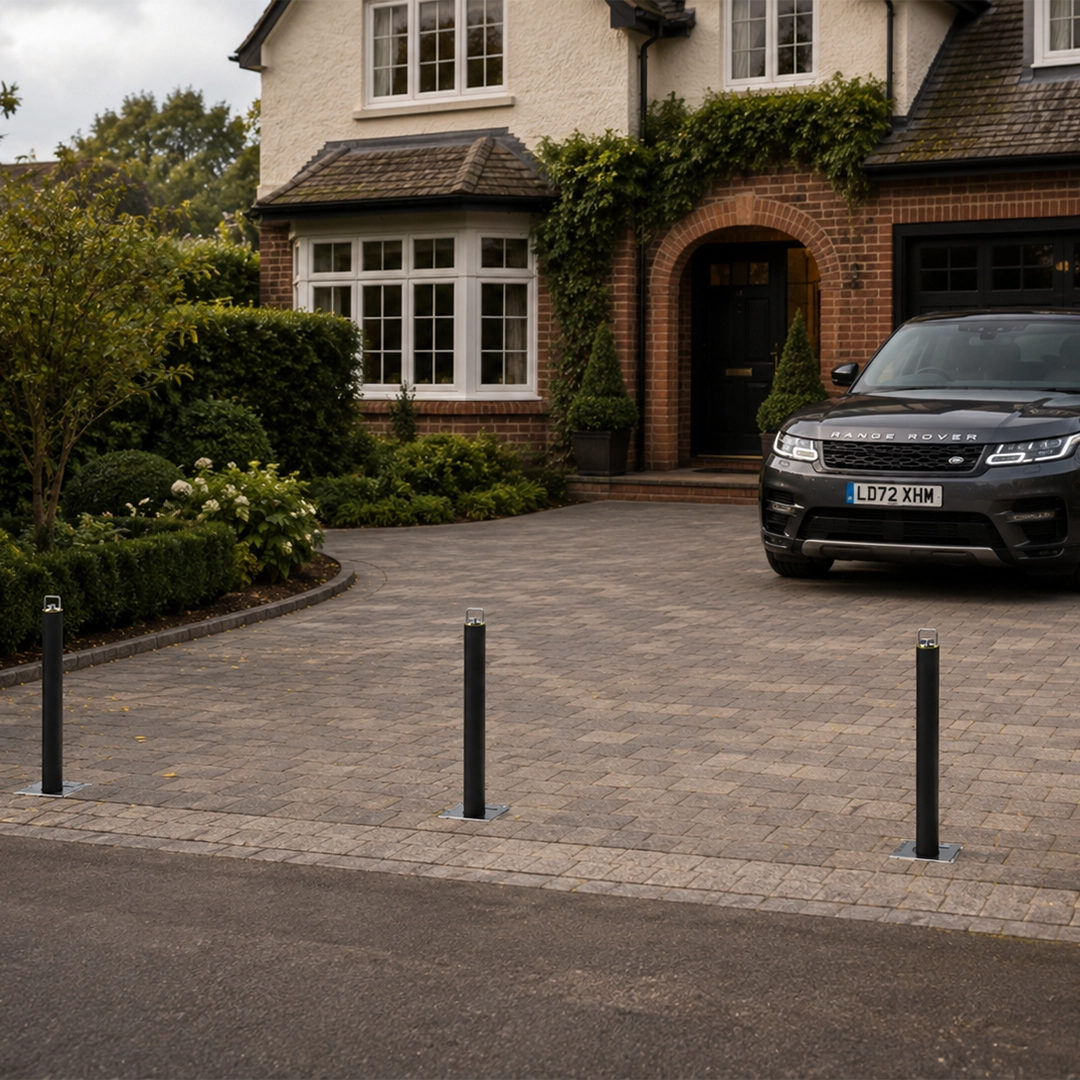
A well-positioned driveway bollard can make it considerably more difficult to drive a vehicle directly off a property. It can also prevent unwanted vehicles from entering a driveway or private parking space.
In practical terms, driveway bollards can:
No security product can guarantee that a vehicle will never be stolen. The purpose of a bollard is to add another physical obstacle and make unauthorised vehicle movement more difficult.
The principle is simple. A bollard is installed across the practical route a vehicle would take between its parking position and the road.
When access is required, the bollard can be lowered, folded or removed depending on the design. Once the vehicle is back on the driveway, the post is returned to its protective position and locked.
This gives the property owner control over when the driveway is open to vehicles without permanently blocking the entrance.
They can provide a valuable additional layer of protection against vehicle theft, particularly on an open driveway where there is otherwise a clear route onto the road.
If somebody gains access to the vehicle, a raised bollard still has to be dealt with before the car can simply be driven away.
This distinction can be particularly relevant for keyless vehicles. Electronic access to the car does not automatically remove a separate physical barrier positioned in front of it.
A bollard should not replace other sensible security precautions. It is more effective when used as part of a wider approach that may include:
Keeping the bollard key separately from the car keys can also be sensible where practical.
A visible bollard can act as a deterrent because it makes it immediately obvious that the vehicle does not have an unrestricted route off the property.
An opportunistic offender may be less attracted to a driveway where another security measure needs to be overcome before the vehicle can be moved.
The deterrent effect is difficult to measure for an individual property, but the practical benefit is clear: the raised bollard remains a physical obstacle regardless of whether its presence discourages somebody from attempting a theft in the first place.
Buying a substantial security post is only one part of the job. The effectiveness of the completed installation depends on several factors working together.
The bollard needs to block the route a vehicle would realistically use to leave the driveway.
A post positioned too far towards one side may look secure while leaving enough space for the vehicle to manoeuvre around it.
A narrow driveway may only need one centrally positioned post. Wider entrances can require two or more bollards to close the available route effectively.
The bollard also relies on the ground around it.
A strong steel post installed into unsuitable or poorly prepared ground may not provide the intended level of stability. Installation needs to take account of the bollard design and the existing driveway construction.
Block paving, concrete, tarmac and other surfaces can require different preparation and reinstatement.

Drainage is particularly important for telescopic bollards because part of the system sits below ground.
Water, mud, grit and other debris should not be allowed to accumulate around the housing and moving components.
The bollard needs to remain securely locked when raised.
Locks and moving components should be kept clean and checked if they become unusually stiff or difficult to operate.
This is perhaps the most important factor of all.
A bollard can only provide its intended protection when it is raised and locked. A very heavy-duty product that is routinely left lowered may offer less practical security than a more convenient bollard that the homeowner uses every single time.
There is no single design that is best for every property. The most effective option is usually the one that provides suitable physical security while remaining practical enough to operate every day.
Telescopic bollards retract vertically into a housing installed below the driveway.
When security is required, the post is raised and locked. When the driveway needs to be opened, it lowers back into the ground.
This can make them particularly practical for frequently used residential driveways because there is no separate post to carry away and nothing substantial left lying across the surface.
You can view Northern Bollards’ range of telescopic security bollards for domestic and heavier-duty applications.
Removable bollards fit into a ground socket and can be lifted out entirely when access is required.
They leave the route clear once removed, but somebody needs to carry and securely store the post. This can make them more appropriate where the entrance is opened less frequently.
Fold-down bollards remain attached to the driveway and pivot towards the ground when vehicles need to pass.
They can provide straightforward access control, although the lowered post remains on the driveway surface and needs enough clearance around it.
Telescopic bollards can work particularly well on domestic driveways because they combine a visible physical barrier with relatively convenient everyday operation.
Once lowered, the post remains within its underground housing. This means homeowners do not need somewhere else to store it and are less likely to avoid using the bollard because of the inconvenience of carrying it around.
Correct installation is important. The housing needs to be properly aligned and suitable drainage needs to be provided around the below-ground section.
A heavier and more substantial bollard can provide a stronger physical obstacle, but heavier does not automatically mean better for every driveway.
The installation still needs to suit the entrance, and the bollard needs to be practical enough for the person using it.
For a typical domestic driveway, a properly specified residential security bollard may be completely appropriate. Commercial sites, vehicle dealerships or premises requiring a more substantial barrier may benefit from heavier-duty products.
Northern Bollards offers a wider range of security bollards for different residential and commercial requirements.
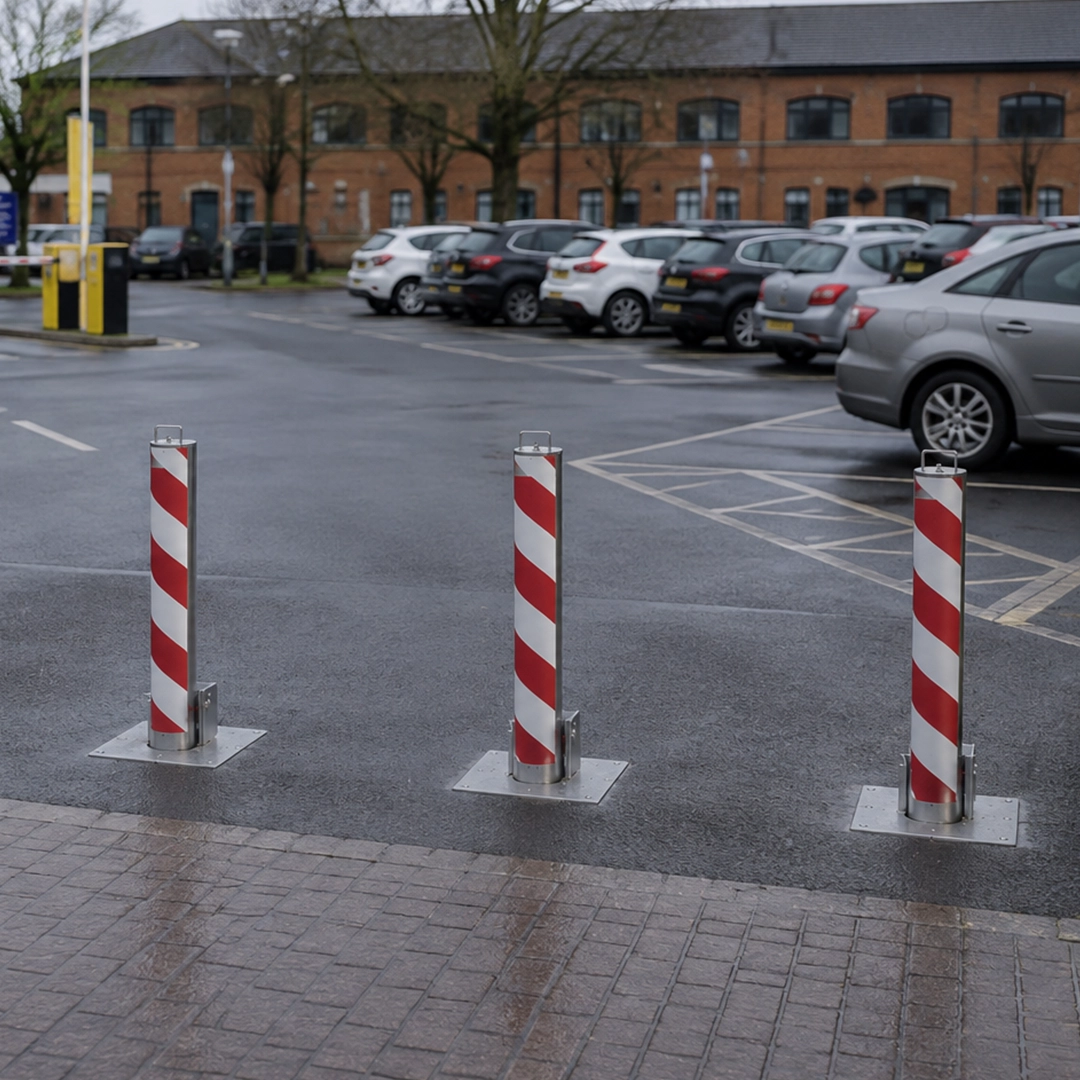
A steel security bollard can create a substantial physical barrier, but this does not mean every bollard should be described as crash rated or impact tested.
Formal vehicle-impact ratings are based on controlled tests involving specific vehicle weights, speeds and impact conditions.
Unless a particular product has supporting test certification, its exact performance during a vehicle collision should not be assumed.
Most ordinary residential driveway bollards are primarily intended to:
Sites requiring protection against deliberate high-speed vehicle impact need specialist products designed and tested for that purpose.
Yes. Preventing unwanted parking is one of the most straightforward uses of a security bollard.
If a post is raised across the entrance to a private driveway or allocated parking space, another vehicle cannot simply drive into the space.
This can be particularly useful for properties close to:
Unlike a sign asking drivers not to park, the bollard physically restricts access.
Ownership and access rights should still be checked before installing anything across shared or communal parking.
Yes, but the number and spacing of the posts become more important as the entrance gets wider.
A single bollard in the middle of a broad driveway may leave enough space for a vehicle to manoeuvre around it.
When planning the layout, consider:
The objective is to close the usable vehicle route without making everyday access unnecessarily awkward when the bollards are lowered.
Yes. One correctly positioned bollard can be effective on a narrow driveway where there is not enough room for the vehicle to pass around either side.
The number required should be based on the entrance rather than assuming every driveway needs the same arrangement.
For a wider opening, two or more bollards may provide better coverage.
A driveway bollard does not prevent somebody from attempting to interfere with a vehicle’s keyless-entry system.
What it can do is provide a completely separate physical barrier.
Even if access to the vehicle itself is gained, the raised bollard remains positioned between the car and the road.
This is why physical driveway security and electronic vehicle security can complement one another rather than performing the same function.
Bollards can also be positioned to help control vehicle movement around other parts of a property.
Fixed posts may be useful near building corners, garage entrances, utility equipment or pedestrian areas where vehicles should not travel.
The proposed position needs to allow for normal turning movements so that the bollard itself does not become an unnecessary collision risk during everyday parking.
The strongest home security arrangements rarely rely on a single product.
A driveway bollard performs one specific job particularly well: restricting vehicle movement.
Other measures can then perform different roles:
Together, these measures create several different layers that would need to be overcome.
A security bollard should remain straightforward to operate throughout its life. Basic care can help prevent dirt, corrosion or damage from making the mechanism unnecessarily difficult to use.
Depending on the product, routine checks may include:
If a bollard becomes difficult to operate, forcing it is rarely the best solution. The cause should be investigated before further damage is created.
Several common issues can reduce the practical protection a driveway bollard provides:
The product specification matters, but the finished security system is only as effective as its installation and everyday use.
They do different jobs, so they are not really direct alternatives.
CCTV is primarily used to monitor and record activity. A security bollard is designed to physically restrict access.
If somebody approaches a parked vehicle, CCTV may capture the event. If they attempt to drive that vehicle away, the bollard creates an obstacle in their path.
Using both measures together therefore provides different types of protection.
For many homes, yes. They are particularly useful where a vehicle is parked on an open driveway with a direct route to the road.
They can also be effective where unwanted parking is a problem or where the property owner wants more control over who can drive onto the land.
The best results usually come from choosing a bollard that matches the driveway rather than simply choosing the largest product available.
Width, position, installation depth, drainage and ease of operation all need to be considered.
Yes. A correctly installed and locked driveway bollard creates a physical obstacle that can make it considerably harder to drive a vehicle directly off a property.
It can be if the bollard is incorrectly positioned or the driveway is too wide for a single post. Wider entrances may require two or more bollards to close the practical route effectively.
No security measure can guarantee that theft will never happen. Bollards add a physical barrier that can make vehicle removal more difficult and should be combined with other sensible security measures.
They can provide a useful additional layer of protection because the bollard remains a physical obstacle even if somebody manages to gain electronic access to the vehicle.
The best choice depends on the driveway width, surface, frequency of use and required level of security. Telescopic bollards are particularly practical for driveways that need to be opened regularly.
One bollard may be sufficient for a narrow entrance. Wider driveways often need multiple posts to prevent vehicles manoeuvring around the barrier.
Not necessarily. A bollard should only be described as crash rated or impact tested where the particular product has evidence of recognised vehicle-impact testing.
Yes. A raised and locked bollard can physically prevent an unauthorised vehicle from entering a correctly protected driveway or private parking space.
Driveway bollards can be highly effective at doing what they are designed to do: physically restricting vehicle movement and controlling access to private property.
They can make vehicle theft more difficult, prevent unauthorised parking and provide a visible indication that the driveway has an additional layer of security.
The effectiveness of any installation depends on choosing the right product, putting it in the right position and installing it on suitable foundations. It also needs to be convenient enough that it is raised and locked whenever protection is required.
You can browse Northern Bollards’ range of driveway security bollards online. If you are unsure about the type, number or positioning of bollards required for your property, contact Northern Bollards for advice.
Tell us what you need and we’ll come back to you with advice, suitable bollard options and the next steps for getting your installation booked.
Read Another Post…