Get In Touch
Tell us what you need and we’ll come back to you with advice, suitable bollard options and the next steps for getting your installation booked.
Manual and automatic driveway bollards do the same basic job: they create a physical barrier that helps control vehicle access and protect a driveway, parking space or private entrance.
The main difference is how they are operated. A manual bollard is raised, lowered or removed by hand, while an automatic bollard uses a powered mechanism controlled by a remote, keypad or another access system.
For many homes, a manual bollard offers the best balance of security, simplicity and cost. Automatic bollards can be more convenient, particularly where an entrance is used frequently, but they usually involve more complicated installation, additional components and greater maintenance requirements.
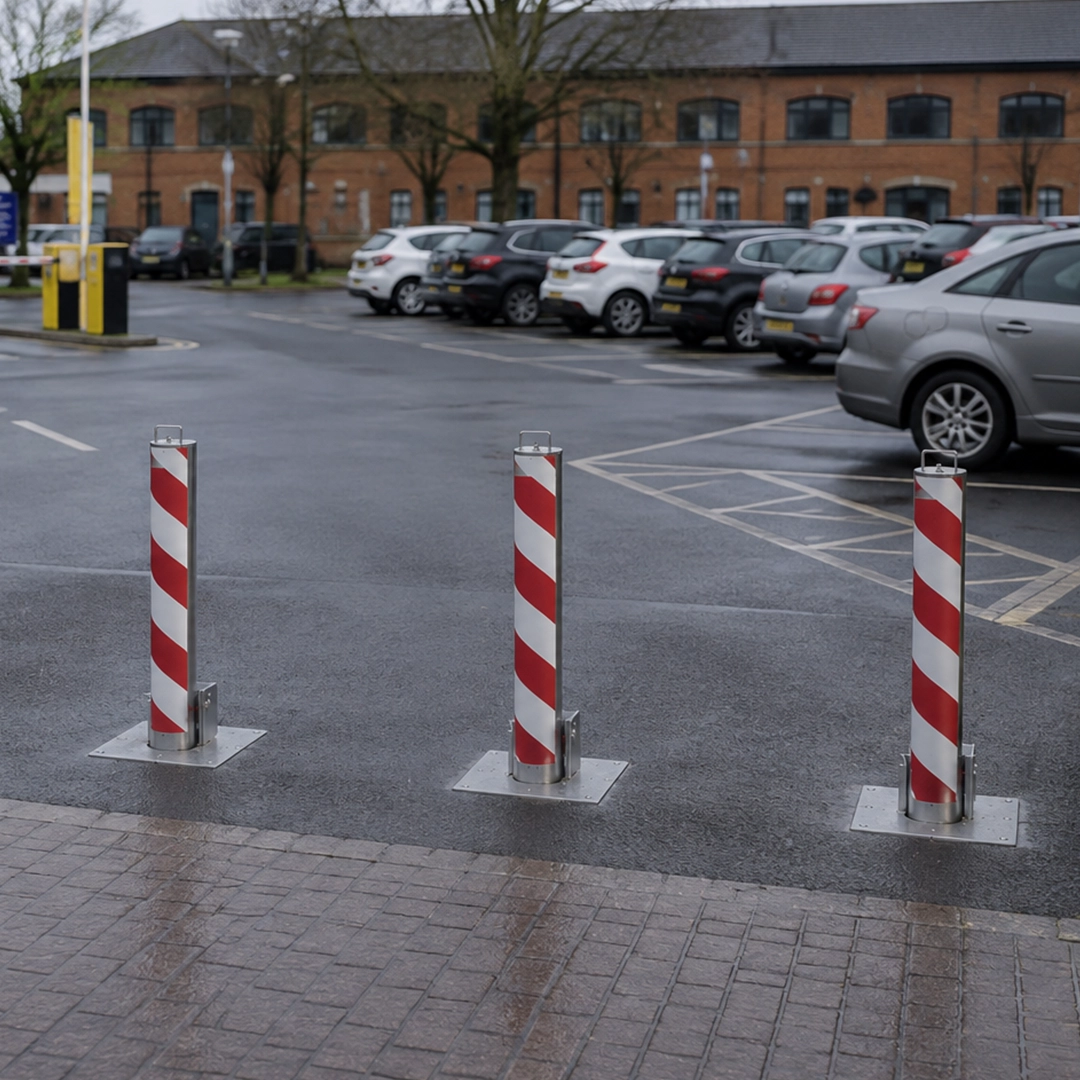
| Feature | Manual Bollards | Automatic Bollards |
|---|---|---|
| Operation | Raised, lowered or removed by hand | Powered operation using a control system |
| Convenience | Requires the user to leave the vehicle | Can usually be operated from the vehicle |
| Installation | Generally simpler, depending on bollard type | Usually requires power, controls and additional groundwork |
| Maintenance | Fewer powered components to maintain | Motors, controls and safety equipment may need servicing |
| Power Required | No mains electricity required | Normally requires an electrical supply |
| Typical Use | Homes, driveways and private parking | Busy entrances, managed access and high-frequency use |
A manual driveway bollard is physically operated by the person using it. Depending on the design, that may mean raising a post from the ground, folding it down or completely removing it from a ground socket.
Most manual security bollards include a lock that secures the post when it is in the raised position.
Common manual designs include:
Because manual systems do not need an electric motor, control panel or powered access system, they generally have fewer components and can be a straightforward choice for residential driveway security.
A manual telescopic bollard retracts vertically into a housing installed beneath the driveway.
When the driveway needs to be secured, the user lifts the post from the ground and locks it into position. When access is required, the bollard is unlocked and lowered back into its underground housing.
This avoids having a loose post to carry or store and keeps the driveway relatively clear when the bollard is not in use.
Some products are designed to reduce the amount of lifting effort required, which can make frequent operation more convenient.
Northern Bollards supplies a selection of manual telescopic security bollards suitable for domestic and heavier-duty applications.

A removable bollard locks into a socket installed within the driveway.
When access is needed, the bollard is unlocked and lifted completely out of the ground. This leaves the driveway clear, which can make removable posts useful where access only needs to be opened occasionally.
The main practical consideration is storage. The post needs somewhere safe to go whenever it has been removed, and the user needs to be comfortable lifting and carrying it.
A fold-down bollard remains attached to the driveway but pivots towards the surface when vehicle access is required.
Once the vehicle is parked, the post can be returned to its upright position and locked.
This avoids having to store the bollard elsewhere, although the lowered post remains on the driveway. Its position therefore needs to be chosen carefully so that it does not interfere with vehicle tyres, doors or pedestrian access.
An automatic bollard uses a powered mechanism to move the post between its raised and lowered positions.
Instead of getting out of the vehicle and physically operating the bollard, the user activates the system using an access control device.
Depending on the installation, that could include:
Automatic systems are often considered where vehicles enter and leave frequently or where several authorised users need controlled access.
Many automatic driveway bollards retract into the ground in a similar way to manual telescopic bollards. The difference is that a powered mechanism raises and lowers the post rather than the user moving it by hand.
A typical installation may require:
The precise arrangement depends on the individual system. More advanced installations can also form part of a wider access-control setup.
Automatic bollards generally offer greater convenience.
The driver can usually open the driveway without getting out of the vehicle, which may be particularly welcome during bad weather, at night or when several journeys are made each day.
Automatic operation can also be useful where somebody would struggle with lifting, bending or manually operating a security post.
That convenience needs to be considered against how often the driveway is actually used. For a household where one or two vehicles leave in the morning and return later in the day, operating a manual telescopic bollard may only add a small amount of effort.
For an entrance opening dozens of times throughout a working day, automatic operation may make considerably more sense.
Manual bollards will generally have a lower overall cost because there is no motorised mechanism, electrical connection or electronic access system to install.
Automatic bollards involve more equipment and usually more installation work. Depending on the system, costs may include electrical work, controls, safety equipment and additional groundwork.
The price of either option will still vary significantly according to the bollard specification, number of posts, driveway construction and installation requirements.
When comparing the two, it is important to consider the complete installed system rather than just the purchase price of the post itself.
Both manual and automatic bollards need appropriate care, particularly where part of the mechanism is installed below ground.
Manual systems are mechanically simpler. Maintenance will often focus on keeping locks and moving parts clean, preventing debris from building up and checking that the surrounding driveway remains stable.
An automatic system contains additional electrical and mechanical components. Motors, control equipment, sensors and safety devices may all require inspection, servicing or repair during the life of the system.
This does not mean automatic systems are unreliable, but there are simply more components involved.
A manual bollard does not rely on mains electricity, so it can continue to be operated normally during a power failure provided the lock and mechanism remain in working order.
An automatic system needs a suitable procedure for loss of power.
Depending on the product, this might include a manual emergency release, backup power supply or another method of raising or lowering the bollard safely.
If the driveway has only one vehicle entrance, understanding what happens during a power failure is particularly important before choosing an automatic system.
Not necessarily.
A bollard does not become stronger simply because it is powered. Its ability to act as a physical barrier depends on factors such as the construction of the post, its foundation, locking arrangement and the way it has been installed.
A substantial manual bollard installed correctly can provide a very strong physical obstacle. Equally, a suitably specified automatic bollard can provide effective access control.
The advantage of automatic operation is convenience rather than automatic improvement in physical strength.
Convenience can indirectly help security if it means the bollard is consistently raised whenever the driveway is left unattended. A manual bollard that is never raised provides little protection, regardless of how substantial it is.
Manual bollards have fewer powered and electronic components, which makes them relatively simple systems.
A well-made manual post that is installed correctly, kept clean and operated properly can provide dependable everyday use without relying on electricity, control boards or motors.
Automatic systems can also be reliable, but their operation depends on more components working together. The motor, controls, sensors, electrical supply and other equipment all need to remain in good condition.
For both manual and automatic telescopic bollards, drainage is important. Water, grit and other debris around a below-ground housing can interfere with moving components if the installation is not properly maintained.
The answer depends partly on the bollard design rather than simply whether it is manual or automatic.
A manual telescopic bollard still requires excavation for the underground housing, whereas certain surface-mounted designs involve less digging.
An automatic rising bollard generally requires below-ground space for the bollard mechanism as well as electrical and control connections.
Before installing either type, the site may need to be considered for:
The strongest or most convenient bollard on paper is no use if the proposed installation position is unsuitable.

They can be.
Imagine a private home where the driveway opens twice in the morning and twice in the evening. Operating a manual bollard four times a day may be entirely manageable.
Now compare that with an apartment entrance, workplace or managed parking area where vehicles could arrive and leave throughout the day. Having every driver manually operate a post quickly becomes less practical.
Automatic systems can therefore make more sense where:
For many ordinary residential driveways, a manual system is a very practical solution.
A manual bollard may be particularly suitable where:
Manual does not necessarily mean inconvenient. A telescopic bollard remains in the ground when lowered, so there is nothing separate to carry into a garage or garden.
For homeowners mainly interested in protecting vehicles and controlling driveway access, this can provide a useful balance between practicality and security.
Automatic operation may have a clear advantage where bending, lifting or carrying a manual bollard would be difficult.
However, not every manual bollard requires the same physical effort.
A removable post may need to be completely lifted from its socket and carried away, while a telescopic design remains within its underground housing. Some manual telescopic models are also designed to reduce lifting effort.
It is therefore worth considering the individual product rather than assuming all manual systems operate in the same way.
Either system can potentially be used on a shared entrance, but the practical and legal arrangements need careful consideration.
An automatic system can make access convenient because authorised users may each be given a remote, fob or access code.
A manual system can also work where users have the appropriate keys or the bollards are keyed alike.
The more important question is whether a barrier can legitimately be installed across the shared access at all.
Ownership, property deeds, leases and existing rights of access should be checked before putting a locked bollard across a driveway used by other people.
If the main requirement is securing a typical residential driveway, manual bollards are often the more straightforward choice.
They provide a physical barrier without requiring powered equipment, electrical installation or electronic controls.
Automatic bollards become more attractive as the frequency of use increases. If the entrance needs opening repeatedly throughout the day, being able to operate the bollards from inside the vehicle can justify the additional complexity.
You can view Northern Bollards’ current range of driveway security bollards to compare suitable options for residential vehicle protection.
Before deciding between manual and automatic operation, consider:
Not automatically. Automatic bollards are generally more convenient, while manual systems are simpler and require fewer powered components. The better option depends on how frequently the entrance is used and what the bollard needs to achieve.
A properly specified and installed manual bollard can create a substantial physical barrier. Security depends on the construction, locking mechanism, foundation and installation rather than whether the bollard is powered.
Most automatic systems require an electrical supply to operate their powered mechanism and controls. The exact requirements depend on the product.
This depends on the system. Suitable automatic installations should provide a way to deal with power failure, which may include backup power or a manual emergency release.
Yes. A manual telescopic bollard retracts into a housing installed below the driveway surface. The user physically raises and lowers the post rather than relying on a motor.
Manual bollards generally have fewer electrical and powered components requiring maintenance. All moving bollards still need suitable care, particularly below-ground systems where drainage and debris can affect operation.
They may be worthwhile where the driveway is used very frequently, manual operation would be difficult or remote access is particularly important. For many ordinary homes, a manual system may provide the required security with less complexity.
Yes. Wider driveways may require two or more bollards to prevent vehicles simply manoeuvring around a single post. The number required depends on the width and layout of the entrance.
For most residential driveways, a good-quality manual bollard offers a straightforward way to add physical vehicle security without introducing motors, control systems or electrical components.
An automatic system is more likely to justify its additional complexity where the entrance is exceptionally busy, several authorised users need regular access or operating a manual post would be difficult.
The decision should ultimately be based on how the driveway is actually used. Security matters, but so does convenience. Whichever system you choose needs to be practical enough that it is consistently raised and secured whenever protection is required.
Northern Bollards specialises in manually operated security bollards for domestic and commercial applications. If you need help working out which type would suit your driveway, contact Northern Bollards with details or a photograph of the proposed installation area.
Tell us what you need and we’ll come back to you with advice, suitable bollard options and the next steps for getting your installation booked.
Read Another Post…